In the realm of lighting design, understanding the relationship between watts and lumens is paramount for achieving optimal brightness and energy efficiency. While watts indicate power consumption, lumens quantify the brightness of a light source. As the world transitions to energy-efficient LED lighting, mastering the watts to lumens conversion becomes essential.
We’ll explore the significance of this conversion, unveil the workings of a watts to lumens calculator, and delve into practical applications across various lighting scenarios.
Understanding Watts to Lumens Conversion:
Watts to lumens conversion is a straightforward yet critical process in lighting design. It involves translating the power consumption of a light source (measured in watts) into its brightness output (measured in lumens). Unlike traditional incandescent bulbs, which rely on higher wattages to produce brighter light, LED bulbs offer superior efficiency, delivering higher lumens per watt.
WATTS TO LUMENS CALCULATOR
Exploring Watts to Lumens Conversion Chart:
For quick reference, a watts to lumens conversion chart provides a comprehensive overview of common wattage ratings and their corresponding lumen outputs for LED bulbs. This visual aid simplifies the selection process, allowing users to compare different bulb options and choose the most suitable ones for their lighting needs.
From residential spaces to commercial environments, the watts to lumens conversion finds application across a myriad of lighting scenarios. Whether illuminating a living room, kitchen, office, or outdoor area, understanding this conversion enables users to create well-lit, energy-efficient environments tailored to their specific requirements.
Consider a scenario where you’re upgrading the lighting in your home office. With a desire to enhance productivity and reduce energy costs, you opt for LED bulbs with a lumens per watt efficiency of 100. By using a watts to lumens calculator, you determine that a 10-watt LED bulb will provide 1000 lumens of brightness, sufficient for illuminating your workspace effectively.
Mastering the watts to lumens conversion is essential for navigating the complexities of modern lighting design. By leveraging tools such as watts to lumens calculators and conversion charts, users can make informed decisions when selecting lighting solutions, ensuring optimal brightness, energy efficiency, and cost savings. As we continue to embrace energy-efficient LED lighting, understanding this conversion empowers us to illuminate our spaces with precision, efficiency, and brilliance.
WHAT IS LUMENS IN LIGHTING?
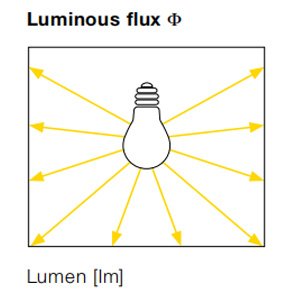
In lighting, the total quantity of light that a lighting device emits is measured in lumens. Lumens are represented as lm. An illumination device’s illumination area increases with its lumen value. The spread or divergence of the light that the gadget is emitting is not taken into account by the lumens unit.
Light Output = Lumens. Simply said, lumens, or lm, are a measurement of the total quantity of light from a lamp or other light source that is visible to the human eye.

The term “candela” describes the amount of light that a lighting fixture emits in a specific direction. Candlepower is also known as candela. Candlepower measurements date back to a time when candles served as the main source of light. A candle of a given size emits roughly the same amount of light as one candela.
Although they each measure different properties of a lighting device, lumens and candela are both used in the measurement of lighting. Choosing lighting fixtures that are perfect for your workspace can be made easier if you understand the distinction between lumens and candelas.
When assessing the luminous efficacy of lighting fixtures in industrial environments, we employ both lumens and candelas. The relationship between candelas and lumens is generally represented by the following equation.
Understanding the distinction between candela and lumens will assist you in selecting the right lighting fixture for your building or area that needs to be lit. To light up an area, for example, you would need to install lights in an office building. For employees to walk around smoothly, corridors and storerooms must have the right amount of light.
The device will emit light that is lighter and covers a broader area when its lumen value is higher. However, some staff members might use complex equipment, so they require overhead lighting that shines directly on the items they are handling. In these situations, you’ll need to purchase lighting fixtures after contrasting their candela ratings.
1 candela = 12.57 lumens
LUMENS CONVERSION CHART
| Watts (W) | Incandescent Bulb | Halogen Bulb | CFL Bulb | LED Bulb |
|---|---|---|---|---|
| 5 | 200 | 250 | 300 | 350 |
| 10 | 400 | 500 | 600 | 700 |
| 15 | 700 | 850 | 1000 | 1150 |
| 20 | 900 | 1100 | 1300 | 1500 |
| 25 | 1100 | 1300 | 1600 | 1850 |
| 30 | 1300 | 1550 | 1900 | 2200 |
| 40 | 1800 | 2200 | 2600 | 3000 |
| 50 | 2300 | 2900 | 3300 | 3800 |
| 60 | 2700 | 3200 | 4000 | 4500 |
| 75 | 3400 | 4200 | 5200 | 6000 |
| 100 | 4600 | 5600 | 6800 | 8000 |
LED technology has emerged as a frontrunner, offering enhanced efficiency and longevity. One of the key metrics used to evaluate LED bulbs is their wattage equivalence to traditional incandescent bulbs. To match the brightness of a 60-watt incandescent bulb, an LED bulb typically requires significantly fewer watts. For An LED lightbulb, for instance, may generate the same amount of light as an incandescent bulb, which consumes 60 watts, but it needs a lot less energy—8 to 12 watts.
The Candela to Lumen Calculator with Apex Angle serves as a beacon of precision in the realm of lighting design. By facilitating seamless conversion between luminous intensity and total luminous flux, this tool empowers lighting professionals to create environments that are both visually captivating and functionally efficient. As we continue to innovate in the field of lighting engineering, let us illuminate the world with knowledge, creativity, and purpose.