Some lighting fills a room.
Some lighting defines it.
Suspended linear lighting belongs to the second category.
If you’ve ever walked into a modern kitchen, a high-end office, or a refined dining space and noticed that long, slim light floating effortlessly above a table that’s the power of a well-designed modern linear pendant light. It makes a statement without shouting. It adds presence without adding bulk.
Let’s break down how designers use it strategically not just beautifully.
Why Designers Love Suspended Linear Lighting
Traditional chandeliers can sometimes feel heavy. Even when they’re stunning, they visually “occupy” space.
Linear suspension lights are different. They:
- Emphasize clean architectural lines
- Keep ceilings feeling open and uncluttered
- Deliver focused task lighting
- Feel contemporary and premium
They work especially well over:
- Dining tables
- Kitchen islands
- Conference tables
- Reception counters
- Retail displays
If you’re unsure whether to hardwire or plug in your decorative lighting, you might find this helpful:
Hardwired vs Plug-In Decorative Lights: What’s the Difference?
And if you’re exploring broader lighting aesthetics, check:
Minimalist to Boho: Decorative Lighting Styles That Are Trending Right Now
It’s Not About Size — It’s About Visual Weight
Here’s something many people misunderstand:
A fixture can be long… and still feel light.
The secret is in the profile.
A 1500mm slim architectural LED linear fixture with a 25mm thickness often feels lighter than a bulky 600mm chandelier. Why? Because it doesn’t interrupt the visual flow of the space.
Designers look for:
- Ultra-slim aluminum bodies
- Minimal suspension cables
- Concealed drivers
- Clean edges
The thinner the profile, the more sophisticated the look.
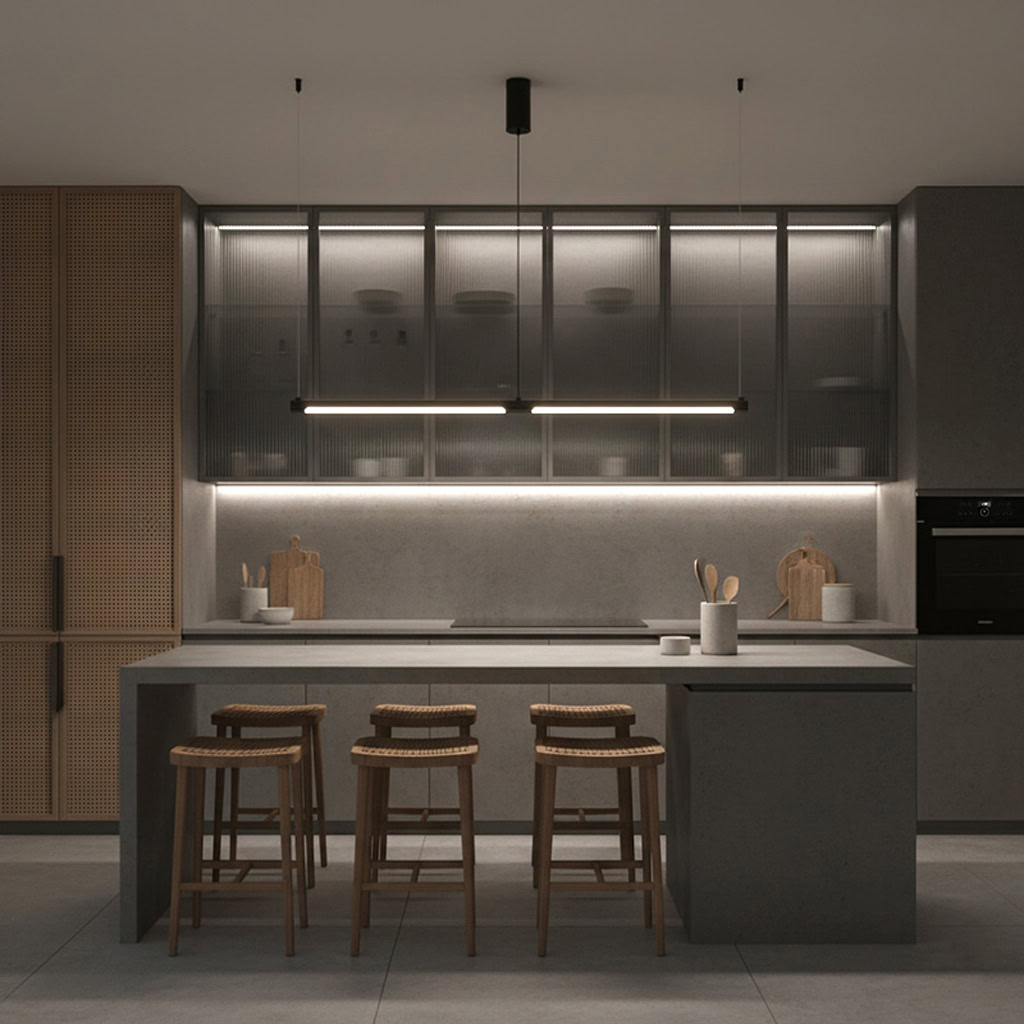
Getting the Proportions Right
This is where good design becomes great design.
For dining tables and kitchen islands:
Fixture length should be about 60–80% of the table length
Leave at least 150–200mm margin on each side
Hang 750–900mm above the tabletop
Too short? It looks awkward.
Too long? It overwhelms.
For office tables, alignment matters even more. The light should follow the geometry of the table not fight it.
And if your ceiling is under 9 feet? Choose micro-cable suspension to reduce visual drop.
It Still Has to Perform
A sleek fixture is meaningless if it doesn’t light the space properly.
When choosing kitchen island linear lighting or a commercial linear suspension light, pay attention to:
Brightness (Lux Levels)
- Dining: 150–300 lux
- Kitchen task areas: 300–500 lux
- Offices: 400–600 lux
Color Temperature
- 2700K–3000K → Warm and cozy
- 3000K–3500K → Balanced and modern
- 4000K → Crisp and commercial
CRI
Aim for CRI 90+ if you want colors to look natural and premium.
Many designers prefer direct + indirect linear suspension lighting. It throws light downward for tasks while softly washing the ceiling upward — making the room feel taller and more spacious.

Choosing the Right Finish
Material changes everything.
A matte black linear pendant feels sharp and architectural.
A brushed brass linear light feels warm and upscale.
A white minimalist slim LED suspension blends quietly into the ceiling.
Glass elements soften the technical feel.
The best approach?
Match the finish with other hardware window frames, cabinet handles, or metal accents — so everything feels intentional.
How to Create Impact Without Bulk
This is where suspended linear lighting truly shines.
1. Use Repetition
Two parallel slim pendants over a long island create rhythm without clutter.
2. Go Longer Instead of Bigger
A 2400mm ultra-slim fixture makes a stronger statement than a heavy sculptural piece.
3. Respect Negative Space
Let the light breathe. Don’t crowd the ceiling with multiple competing fixtures.
4. Play with Geometry
Offset or intersecting linear lights can create a sculptural feel without adding physical mass.

Installation Details Matter More Than You Think
Even a luxury architectural linear pendant light can look wrong if installed poorly.
Plan for:
- Proper ceiling reinforcement
- Precise cable alignment
- Concealed drivers
- Compatible dimming systems (TRIAC, 0–10V, or DALI)
Design isn’t just what you see it’s how well it’s executed.
Where Suspended Linear Lighting Works Best
Suspended linear lighting is incredibly versatile, which is why designers use it across residential, commercial, and hospitality projects.
In residential spaces, it shines above kitchen islands and dining tables where clean, focused illumination is essential. It also works beautifully in stair voids, creating a vertical architectural statement, and in walk-in wardrobes where sleek task lighting enhances both functionality and luxury.
In commercial environments, linear suspension lights bring structure and clarity to conference rooms, highlight product zones in retail displays, and create a sharp, professional impression above reception desks.
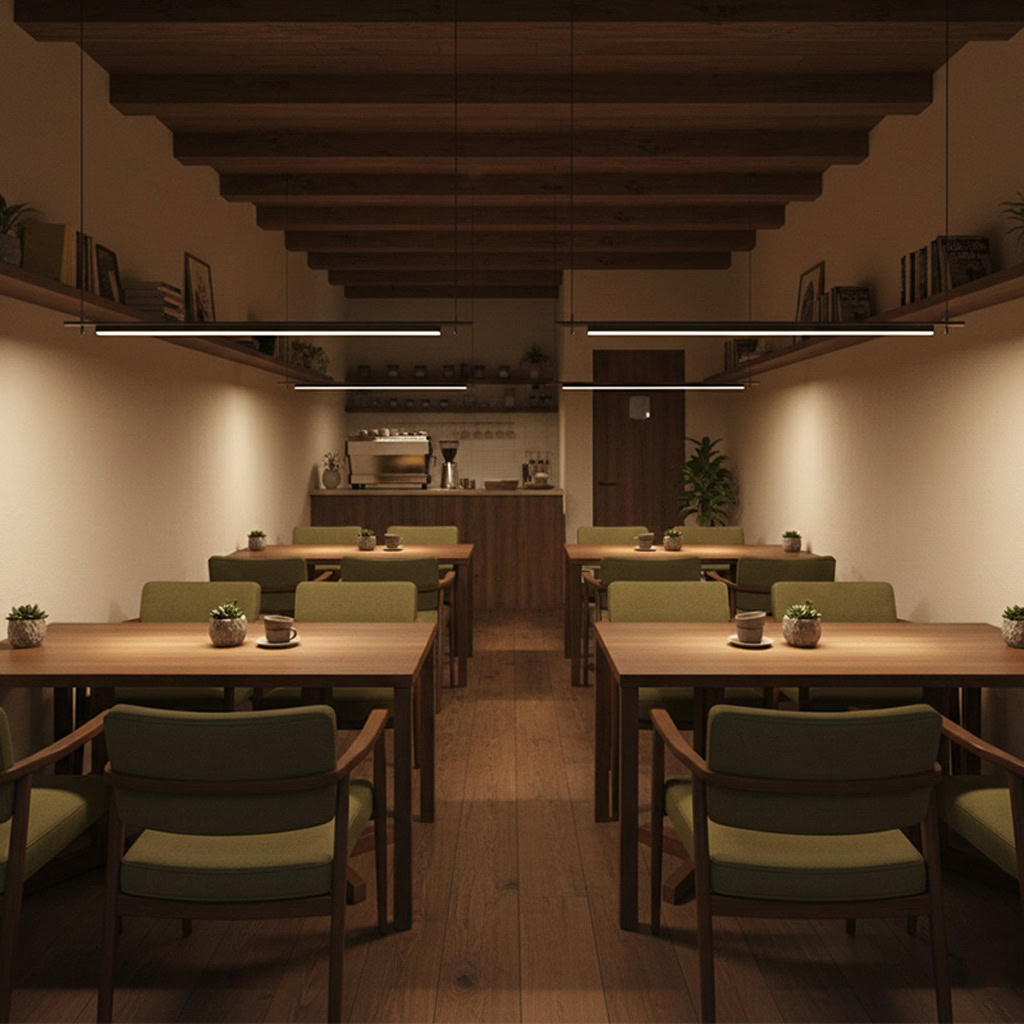
Within hospitality settings, they add quiet sophistication to restaurants, boutique lounges, and hotel dining areas. The slim profile keeps the atmosphere intimate, while the precise illumination elevates the overall experience.
In upscale interiors especially, suspended linear lighting delivers refinement and balance—making a statement without ever overwhelming the space.
Common Mistakes to Avoid
- Choosing a fixture that’s too short
- Ignoring lumen output
- Hanging it too high
- Selecting the wrong color temperature
- Overcrowding the ceiling
Remember simplicity increases impact.
Final Thoughts: The Future of Architectural Lighting
Suspended linear lighting represents the shift toward precision, refinement, and intentional design. It delivers presence without volume and elegance without excess.
As interiors continue to move toward cleaner aesthetics and architectural minimalism, linear suspension fixtures will remain at the forefront of modern lighting design.
If you’re designing a space that demands sleek sophistication without visual clutter, suspended linear lighting is not just an option ,it’s the professional choice.
- FAQ
1. What is suspended linear lighting?
Suspended linear lighting refers to long, slim light fixtures that hang from the ceiling using cables or rods. These fixtures provide clean, focused illumination while maintaining a minimal visual profile. They are commonly used over dining tables, kitchen islands, conference tables, and reception desks.
2. How long should a linear pendant light be over a dining table?
Ideally, the fixture should be about 60–80% of the table length. This keeps the proportions balanced and prevents the light from looking either too small or overpowering.
3. What is the ideal height to hang suspended linear lighting?
For dining tables and kitchen islands, hang the fixture 750–900mm above the tabletop. In commercial spaces, the height may vary depending on ceiling height and lighting needs.
4. Is suspended linear lighting suitable for low ceilings?
Yes, but choose a slim profile pendant light with minimal drop cables. A thin fixture with tight suspension helps maintain a clean look without crowding the ceiling.
5. What color temperature works best for linear suspension lighting?
- 2700K–3000K for warm residential spaces
- 3000K–3500K for balanced modern interiors
- 4000K for offices and commercial settings
Choosing the right temperature ensures comfort and proper visual clarity.
6. How many lumens do I need for kitchen island linear lighting?
For task areas like kitchen islands, aim for 300–500 lux. The exact lumen output depends on island size and ceiling height.
7. Can suspended linear lighting provide both task and ambient light?
Yes. Many modern fixtures offer direct and indirect lighting, meaning they illuminate the surface below while softly washing light upward onto the ceiling for added ambiance.
8. Is suspended linear lighting only for modern interiors?
Not at all. While it complements minimalist and contemporary spaces beautifully, finishes like brushed brass or glass elements can make linear pendants suitable for transitional or luxury interiors as well.