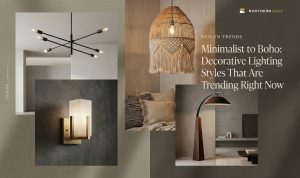
Minimalism is changing.
It’s no longer about empty white rooms or sharp, ultra-modern edges. Instead, homeowners and designers are craving spaces that feel quiet, grounded, and real. That’s exactly why Japandi and Wabi-Sabi lighting is shaping the future of minimal home design.
At their core, both styles value simplicity but not perfection. They celebrate natural materials, soft light, and forms that feel intentional rather than flashy. And when lighting follows these principles, the result is a home that feels peaceful, warm, and timeless.
Understanding Japandi and Wabi-Sabi Through Light
Before we talk fixtures, it helps to understand the mindset behind them.
Japandi blends Japanese minimalism with Scandinavian warmth. It’s clean, functional, and calm but never cold.
Wabi-Sabi, on the other hand, embraces imperfection, asymmetry, and aging materials. It finds beauty in subtle textures and quiet flaws.
When these philosophies influence lighting, fixtures stop being decorative “objects” and start becoming part of the space itself.
Why Lighting Matters More Than Ever in Minimal Homes
In minimal interiors, you don’t have layers of decor to hide behind.
Lighting becomes one of the strongest visual and emotional elements in the room.
That’s why Japandi and Wabi-Sabi lighting works so well:
- It focuses on soft illumination, not glare
- It uses natural materials instead of glossy finishes
- It prioritizes form, balance, and restraint
Rather than demanding attention, these lights gently support how a space feels throughout the day.
Wabi Sabi Linear Kitchen Chandeliers: Quiet Statements

Kitchens are often the hardest spaces to soften. Yet, this is where Wabi Sabi Linear Kitchen Chandeliers truly shine.
Instead of polished metal or crystal-heavy designs, these chandeliers feature raw finishes, muted tones, and simple linear forms. The beauty lies in their restraint.
They work especially well above kitchen islands where:
- Clean lines are needed
- Visual clutter is avoided
- Light feels calm and even
Because of their understated design, they complement stone countertops, wooden cabinetry, and textured walls without overpowering them.
Japandi Fabric Pendant Lights: Softness You Can Feel

If there’s one element that instantly adds warmth to a minimal home, it’s fabric lighting.
Japandi Fabric Pendant Lights bring a tactile softness that hard materials can’t. Linen, cotton, and woven fabrics gently diffuse light, creating an atmosphere that feels relaxed and lived-in.
These pendants are perfect for:
- Dining areas
- Bedrooms
- Reading corners
They don’t just illuminate a space — they soften it emotionally. As a result, rooms feel more inviting without adding visual noise.
Japandi Stone Pendant Lamps: Nature as Design

Stone is central to both Japandi and Wabi-Sabi philosophy. It’s raw, grounding, and timeless.
Japandi Stone Pendant Lamps introduce a sense of permanence and calm. Each piece feels slightly different, which aligns beautifully with the idea that no two homes or lives are exactly alike.
These lamps work especially well in:
- Entryways
- Dining tables
- Minimal living rooms
Because stone absorbs and reflects light subtly, the glow feels natural rather than artificial.
Wabi Sabi LED Wall Sconce Lights: Minimal, Yet Emotional

Wall lighting is often underestimated. However, in minimalist homes, it plays a crucial role in shaping how a space feels rather than how it looks.
Wabi Sabi LED Wall Sconce Lights are created to merge seamlessly with architecture instead of standing apart from it. They sit naturally on walls, along corridors, and along staircases, becoming part of the structure rather than a decorative afterthought.
What truly sets them apart is their ability to:
- Highlight natural textures
- Create gentle depth through soft shadows
- Guide movement quietly from one space to another
Rather than relying on harsh brightness, these sconces emit a calm, ambient glow. As a result, walls and surfaces feel warmer, more tactile, and deeply connected to the overall mood of the home.
Why These Styles Are the Future, Not a Trend
Japandi and Wabi-Sabi lighting isn’t just popular it’s necessary.
Modern life is loud. Screens are bright. Spaces are overstimulating. Homes are now expected to counterbalance that chaos.
These lighting styles succeed because they:
- Reduce visual stress
- Age beautifully over time
- Feel intentional rather than trendy
Unlike fast-design fixtures, Japandi and Wabi-Sabi lights don’t feel outdated after a few years. In fact, they often look better as materials mature and spaces evolve.
Designing With Intention, Not Excess
The future of minimal home design isn’t about owning less — it’s about choosing better.
When you introduce:
- Wabi Sabi Linear Kitchen Chandeliers
- Japandi Fabric Pendant Lights
- Japandi Stone Pendant Lamps
- Wabi Sabi LED Wall Sconce Lights
you’re not just adding light. You’re shaping mood, rhythm, and stillness.
And in a world that rarely slows down, that might be the most luxurious design choice of all.
- FAQ
What is Japandi lighting?
Japandi lighting combines Japanese minimalism with Scandinavian warmth. It focuses on simple forms, natural materials, and soft illumination that feels calm and functional rather than decorative or flashy.
How is Wabi-Sabi lighting different from regular minimalist lighting?
While minimalist lighting often aims for precision and perfection, Wabi-Sabi lighting embraces subtle imperfections. Uneven textures, muted finishes, and organic forms are intentional, creating a more emotional and lived-in atmosphere.
Is Japandi and Wabi-Sabi lighting suitable for modern homes?
Yes. These styles work especially well in modern homes because they soften clean architectural lines. They add warmth and depth without disrupting a contemporary layout or making the space feel cluttered.
Where do Wabi Sabi LED wall sconce lights work best?
Wabi Sabi LED wall sconce lights are ideal for hallways, staircases, bedrooms, and living areas. They provide gentle ambient lighting that enhances wall textures and creates a calm flow between spaces.
Are Japandi pendant lights bright enough for daily use?
Japandi pendant lights are designed to provide comfortable, diffused light rather than harsh brightness. When paired with layered lighting, they work perfectly for dining, kitchen islands, and everyday living spaces.
What materials are commonly used in Japandi and Wabi-Sabi lighting?
Common materials include fabric, stone, ceramic, wood, brushed metal, and matte finishes. These materials age gracefully and align with the philosophy of natural beauty over polished perfection.
Will these lighting styles go out of trend?
Japandi and Wabi-Sabi lighting is considered timeless rather than trendy. Because the designs are rooted in simplicity and natural materials, they tend to age beautifully instead of feeling outdated.
Can I mix Japandi and Wabi-Sabi lighting in one home?
Absolutely. Japandi and Wabi-Sabi complement each other naturally. Mixing them creates balance — clean structure from Japandi and emotional depth from Wabi-Sabi — resulting in a cohesive and calming interior.